
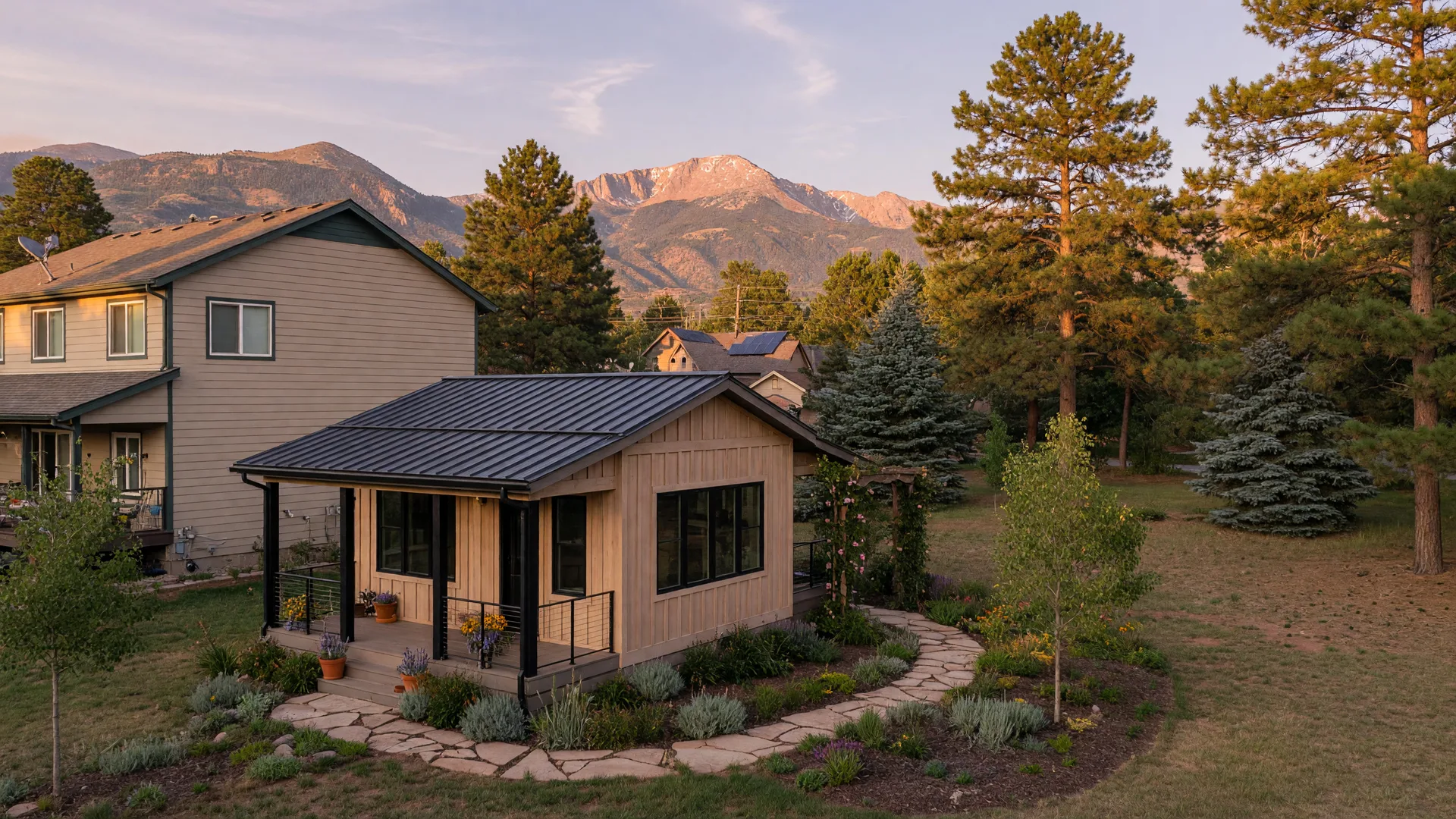
Colorado Springs Just Changed Its ADU Rules: What Homeowners Need to Know
Colorado Springs now permits ADUs in every residential zone where single-family homes are allowed — no minimum lot size, no required parking, no owner-occupancy rule. Here is what that means for homeowners, buyers, and investors.
If you own a home in Colorado Springs, there is a change that just took effect that you should know about. It could change how you think about your property's value, your future plans, and even your monthly income.
The city rewrote its rules on Accessory Dwelling Units — those small, separate living spaces built on the same lot as a single-family home. And the new rules are significantly more permissive than what was on the books before.
What Changed, Exactly
Under the old rules, building an ADU in Colorado Springs came with a long list of hurdles. Zoning restrictions, minimum lot sizes, parking requirements, owner-occupancy mandates — each one added time, cost, and uncertainty to the process.
The new rules eliminate most of those barriers:
- ADUs are now permitted in every residential zone district where single-family homes are allowed. That covers the vast majority of residential lots in the city.
- No minimum lot size. You do not need a sprawling property to qualify. Even a standard city lot can work.
- No required parking. Under the old rules, you had to provide off-street parking for the ADU. That requirement is gone.
- No owner-occupancy requirement. You are not required to live in either the main house or the ADU yourself. This opens the door for rental investors who do not plan to live on the property.
These changes make ADUs more accessible than they have ever been in Colorado Springs. And that matters for a few reasons.
What This Means for Homeowners
If you have been thinking about adding a rental unit to your property — whether for extra income, a place for an aging parent, or a space for adult kids to live while they save for their own home — the path just got a lot simpler.
An ADU can generate rental income that helps offset your mortgage or covers property taxes. In a market where home prices have leveled off and mortgage rates are higher than they were a few years ago, that extra income stream can make a real difference in your monthly budget.
It also adds value to your property. Homes with a permitted ADU typically sell for more than comparable homes without one, because the next buyer inherits an income-producing asset or a ready-made guest house.
What This Means for Buyers and Investors
For buyers shopping in Colorado Springs, a home with an existing ADU is worth a closer look. You are not just buying a house — you are buying a property with built-in flexibility. That could be a rental unit from day one, a home office with a separate entrance, or a space for extended family.
For investors, the removal of the owner-occupancy requirement is a significant shift. You can now buy a single-family lot, build or maintain an ADU on it, and rent out both units without living on the property yourself. That opens up a range of investment strategies that were not viable before.
"We have had clients ask about ADUs for years. The old rules made it hard to say yes with confidence. The new rules change that. If you have been sitting on the fence about adding a unit to your property, now is the time to take a serious look at what is possible."
— Lane Morrell
Important Regulations to Know
While the new ADU rules open up a lot of opportunity, there are still real regulations that apply. Here is what you need to keep in mind before you start planning:
Size and Height Limits
ADUs are limited to the lesser of 1,250 square feet or half the square footage of the primary home. There is also a 16-foot maximum height restriction, along with setback requirements that vary by zone. These limits apply even where ADUs are allowed by right.
Wildfire Overlay Restriction
In the Wildland Urban Interface Overlay — which covers western foothill areas near Pike National Forest, Garden of the Gods, and much of the west side along I-25 — detached and attached ADUs are prohibited. The only legal ADU type in these areas is an integrated ADU (built into the existing structure). If you are shopping in the western foothills, this is a critical detail.
Short-Term Rental Restrictions
Colorado Springs restricts short-term rentals (stays under 30 days) in ADUs. If you are an investor thinking about an Airbnb or vacation rental strategy, this matters. Longer-term rentals are still allowed.
Accessory Family Suites
There is also a separate category called Accessory Family Suites, where occupancy is often limited to biological or legally adopted family members rather than unrelated tenants. If you are planning to house non-family members, make sure you are building under the standard ADU rules, not the family suite category.
As always, permitting and building codes still apply. We recommend talking to the city's planning department or working with a builder who knows the local ADU process inside and out.
A Few Things to Keep in Mind
Permitting, building codes, and utility connections still apply. An ADU is not a shed or a converted garage you can throw together over a weekend — it needs to meet the same building standards as any other dwelling. But the zoning and parking barriers that used to stop many projects before they started are now gone.
If you are in an HOA-governed community, check your covenants. City rules and HOA rules are separate, and your HOA may still have restrictions on ADUs even though the city has lifted its own.
And if you are thinking about building one, talk to a local contractor who has experience with ADUs in Colorado Springs. The permitting process is clearer now, but experience still matters when it comes to navigating the details.
The Bottom Line
This is one of the most significant zoning changes Colorado Springs has made in years. If you own a home here, it is worth understanding how the new rules apply to your property.
Whether you are curious about adding an ADU to your current home or looking for a property that already has one, we would love to help you explore your options. There are no emergencies in real estate — we are here when you are ready.