Data Centers Are Coming to Colorado Springs. What That Means for Your Home.
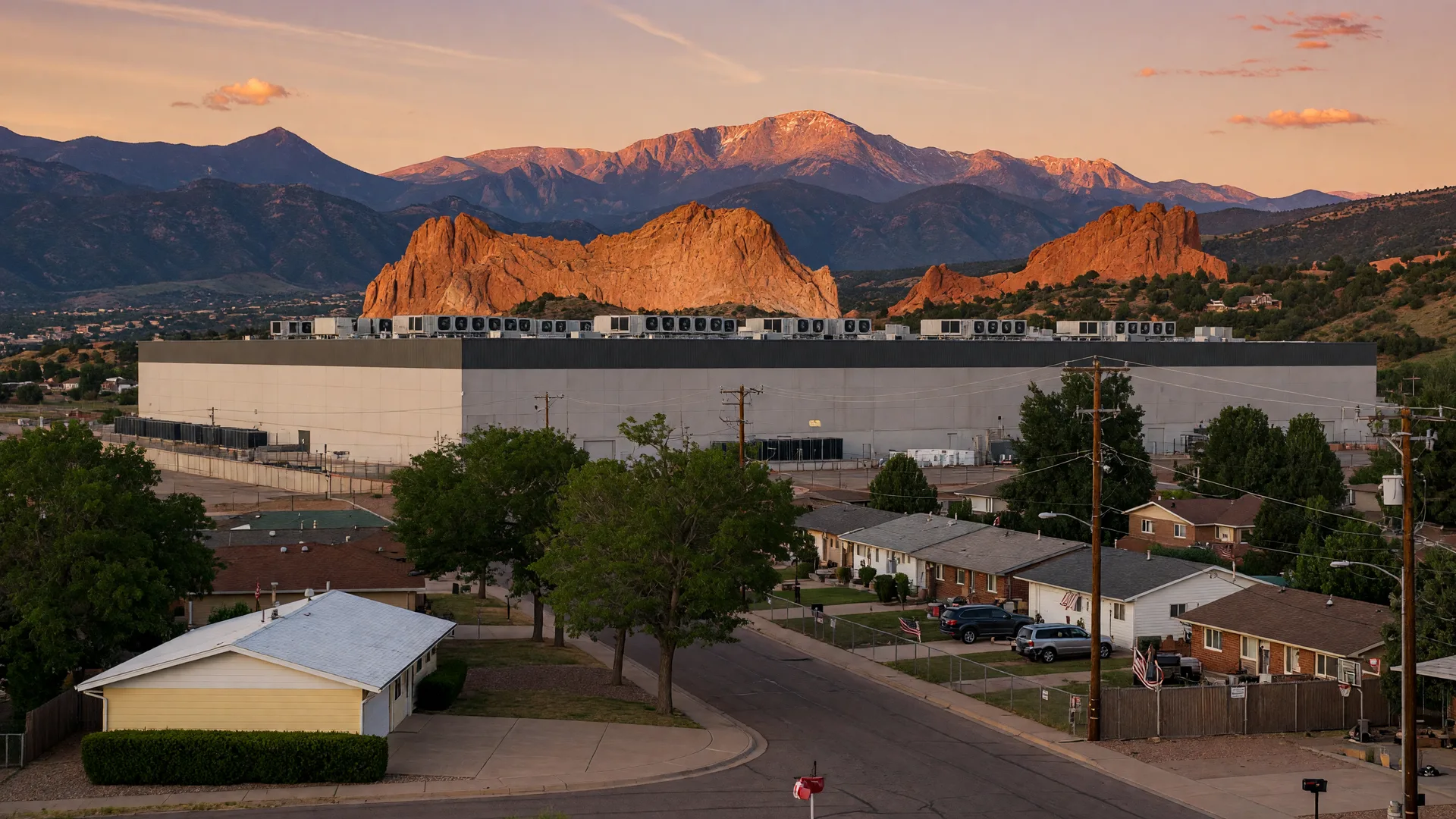
A major AI data center, Project Taurus, is proposed for the former Intel plant off Garden of the Gods Road. Here is what the research says a nearby data center means for your home.
A major AI data center called Project Taurus is proposed for the former Intel chip plant off Garden of the Gods Road in Colorado Springs. If you live anywhere on that side of town, or you are thinking of buying or selling a home in the area, you are probably asking the same question: what does a data center nearby mean for my home?
It is a fair question, and it deserves a straight answer. Here is where things stand, what the research actually shows, and how to think about it whether you are buying or selling.
The Project Taurus story, in plain English
Here is where the proposal stands right now. The city's Planning Department administratively approved Project Taurus in June 2026. Nearby residents appealed that decision, and the appeal was denied by the Planning Commission in July 2026. The project is now before City Council, where the next decision will be made.
If you want to weigh in, City Council is the place to do it. If you want to understand what it means for your home, that is exactly what we do every day, and the rest of this post will help you get there.
This is a national trend, and it reached the Springs
Colorado Springs is not the only city having this conversation. In 2015, only about a dozen U.S. ZIP codes had a large data center. By the first half of 2026, that number had climbed past 100, according to Realtor.com.
The growth is concentrated in Texas, Virginia, Georgia, Pennsylvania, Ohio, Utah, Illinois, Arizona, Indiana, and Nevada, per HousingWire. Colorado Springs is part of this broader wave as AI infrastructure expands across the country.
Why this matters: The data center debate is happening in hundreds of communities right now. That means the research on what these facilities do to nearby home values is growing, and it is worth reading carefully.
What the research actually says about home values
The most useful research compares ZIP codes that gained a large data center with similar matched communities that did not. The findings: home values generally tracked the matched communities, with no statistically meaningful gains or losses. Listing prices did show a modest initial increase around the time facilities opened (HousingWire).
Recent national reporting from NPR (September 2026) makes the same point in plainer terms: there is no universal answer, and effects vary by market.
Here is the part that matters most for homeowners. Distance, design, screening, and noise mitigation matter far more than a data center's existence alone. A well-screened facility with generators set back from homes is a very different neighbor than one built right on a property line, and the research bears that out.
The tradeoffs worth weighing
The upsides are real. A facility like this brings jobs, substantial property tax revenue, and infrastructure upgrades such as new roads and fiber. Project Taurus plans include sound walls and generator placement away from residential areas to reduce noise.
The downsides are real too. Large facilities and the transmission lines that feed them change the look and feel of an area. Cooling equipment, generators, construction, and truck traffic can be noticeable up close. And the facilities' power and water demands can be one factor in gradual utility rate changes over time.
None of this is a reason to panic. It is a reason to be informed, and informed is exactly what you should be before a decision this big.
If you're buying: do your homework before the offer
If you are buying a home near a proposed or approved data center, find out what is already built, approved, or proposed nearby before you make an offer. Then consider the things that actually drive your day-to-day life and your resale later:
None of these questions is a deal-breaker by itself. Together, they tell you what living there will actually feel like, and what the neighborhood could look like in ten years.
If you're selling: expect questions, and be ready with facts
If you are selling a home near a proposed or approved data center, do not assume it automatically hurts your value. The research does not support that. But do expect buyer questions, because people are reading the same headlines you are.
Be ready with facts about the facility, the construction timeline, noise mitigation, and future plans. A seller who can answer those questions calmly, with real information, keeps the deal moving. A seller who gets defensive makes a buyer wonder what they are not being told.
Our advice: bring the disclosure material, know the timeline, and let the buyer see that you have thought it through. Confidence, backed by facts, wins this conversation every time.
The bottom line
A data center is one more piece of the puzzle for buyers and homeowners to understand, not a reason to panic. Every neighborhood has a story, and this one is still being written in front of City Council.
Whether you are buying, selling, or just wondering what it could mean for your home, we would love to talk it through. We know this market, we know this part of town, and we will give you an honest read on what it means for your specific situation.
Text us at 719-499-9394 or Book a free consultation.
Jeff & Lane Morrell | eXp Realty